
Open your studies to patients nationwide
Decentralized trial matching puts your portfolio in front of patients across the country, who check it against their own medical record. Patient engagement keeps them moving toward screening. Market insights show the landscape you recruit in.
Your portfolio, open nationwide
Patients anywhere check your studies against their own medical record, then head to your sites or your decentralized trial.
2 · Patient engagementFrom first search to screening
Plain questions, plain explanations and one page to take to the doctor keep patients going after they find your study.
3 · Market insightsThe market you recruit in
Therapy areas, sites on the map, companies and products, with who runs each study, where, and when it finishes.
Take your studies beyond the walls of your contracted sites
Every study you are recruiting for is already in StudyMatcher, across your whole portfolio. Patients anywhere in the United States check them against their own electronic medical record, on their phone. That drives referrals to your study sites, or to your decentralized trial, from patients your sites would never have reached.
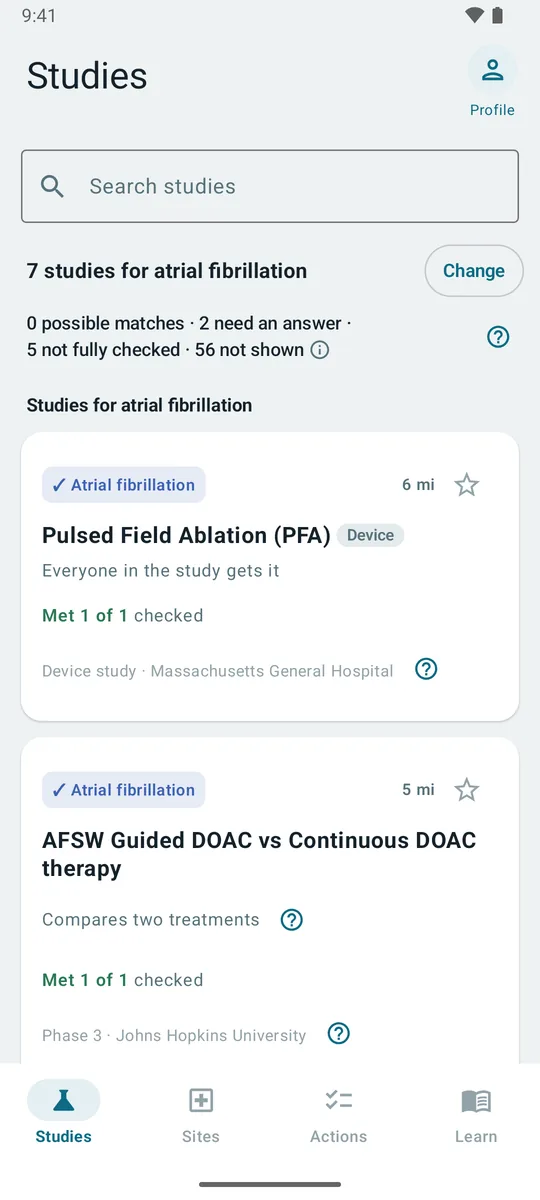
Found from anywhere
Patients search by condition and distance, across every recruiting study, whoever sponsors it and wherever they live.
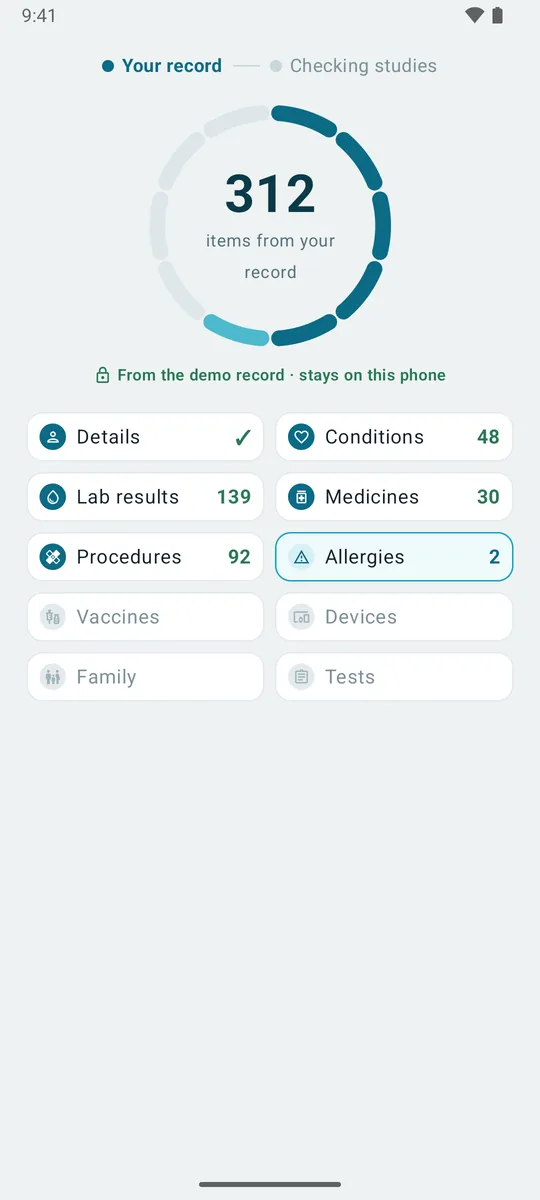
Their own medical record
They sync their record from their health systems over FHIR, with their permission. It stays on their phone.
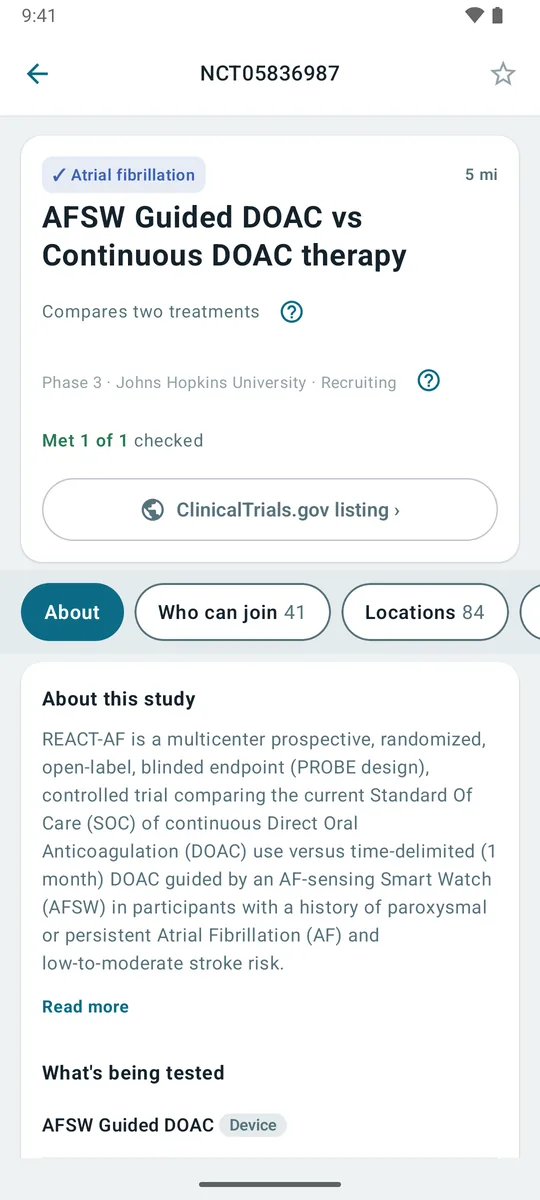
Your criteria, checked
Your inclusion and exclusion criteria, turned into checks people review, run against their record and answers. Locations show the nearest site.
Beyond your site network
A patient outside every site's catchment still finds your study, sees the nearest site, and can travel or ask about a decentralized option.
Referrals that arrive prepared
Patients bring talking points to their doctor and your site: which study, which location, and what still needs checking, such as labs or scores.
Patient-permissioned, on the phone
The check runs on the patient's phone against the record they choose to sync. The app sends no patient data, to us or to you, so there is no patient data to manage.
Criteria people have reviewed
Each criterion becomes a check, and people review the checks before they reach the app. Each study team still decides who can join.
Keep patients moving from first search to screening
Finding a study is the first step. StudyMatcher keeps patients engaged with what comes next: a few plain questions at a time, plain-language explanations, and one page to take to their doctor.
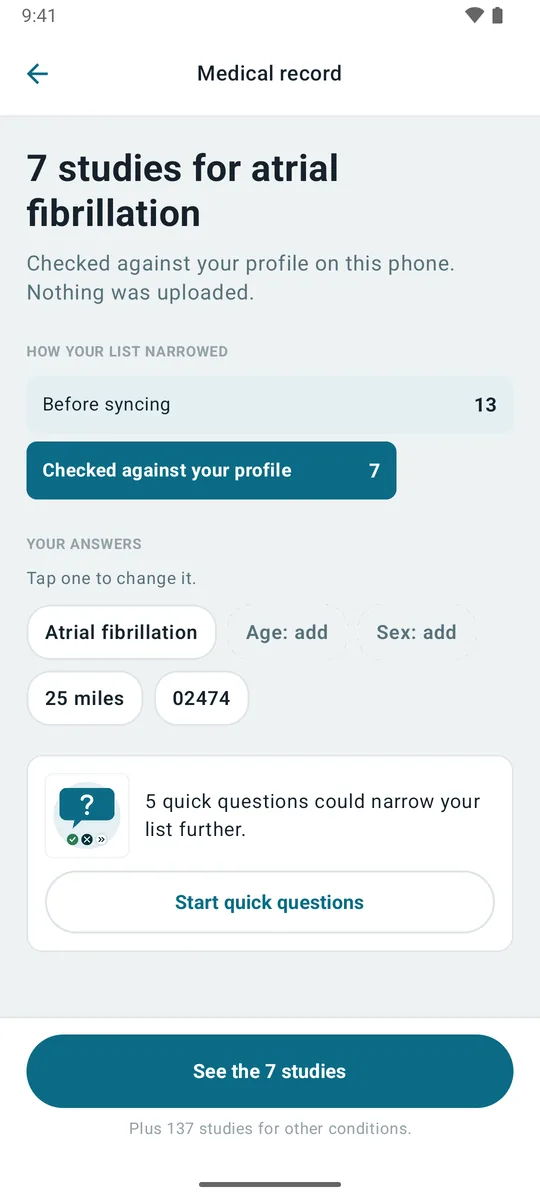
See the list narrow
After each sync or round of answers, patients see how their list narrowed and what to do next.
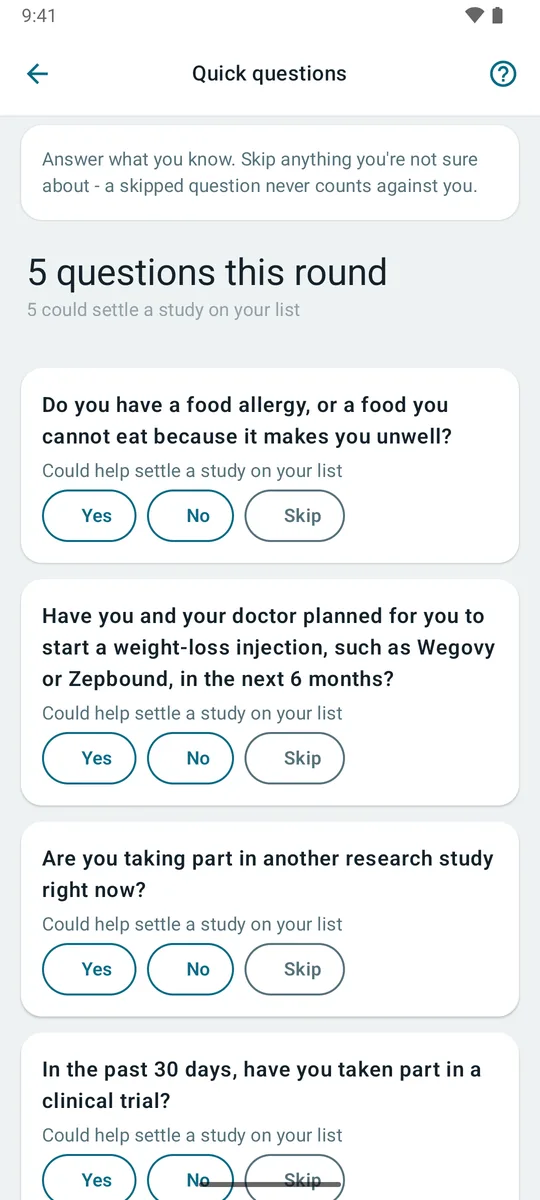
Quick questions
Yes, no or skip. Short rounds cover what a medical record can't, so more of each study gets checked.
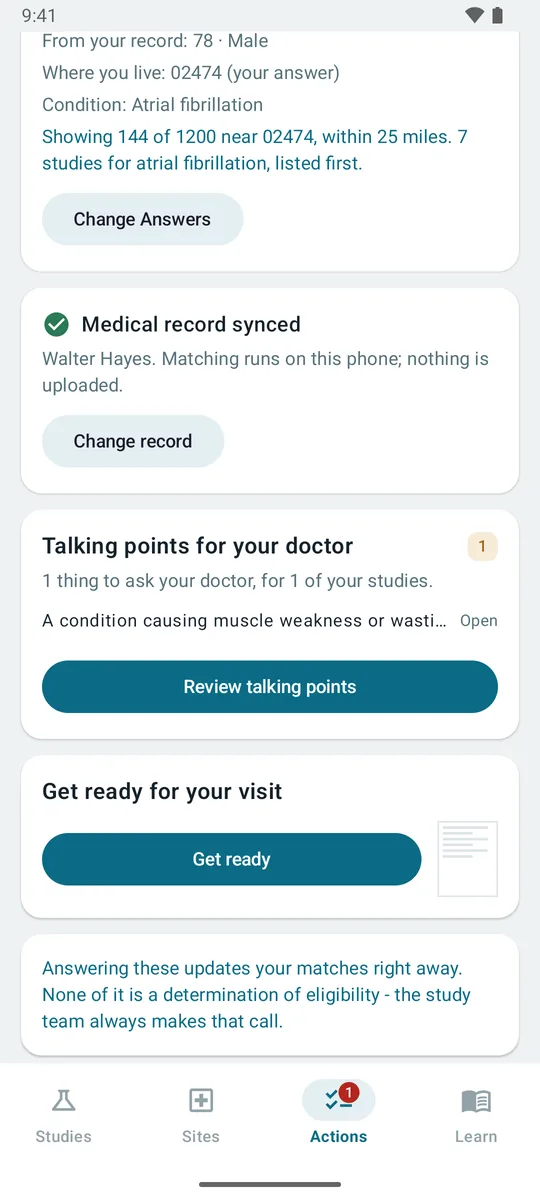
Talking points for the doctor
One page of what to ask, to print or share, so the conversation about your study actually happens.
Plain language
Phases, placebos and randomization explained in a sentence where they appear, with a Learn tab for more.
A clear next step
The Actions tab always shows what's next: sync a record, answer a round of questions, or get ready for the visit.
Caregivers included
A caregiver can go through it with the person they care for, using that person's answers and record.
Know the market you recruit in
Study Market Intelligence joins every interventional study on ClinicalTrials.gov to the products it tests, the companies that make them, and the sites and investigators that run it. Click any slice or bar to filter the page.
Competitive landscape
Who is recruiting in your indication, with which products, at which phase, and when their studies finish.
Site selection
Where studies like yours run, the sites and investigators behind them, and where the gaps are.
Timelines and size
Studies by start year, enrollment targets, and the primary completions coming up in the next 12 months.
Drugs and devices
Products matched to FDA records: Drugs@FDA, the Purple Book, 510(k), PMA and GUDID. A device maker's page shows its pathways and review panels.
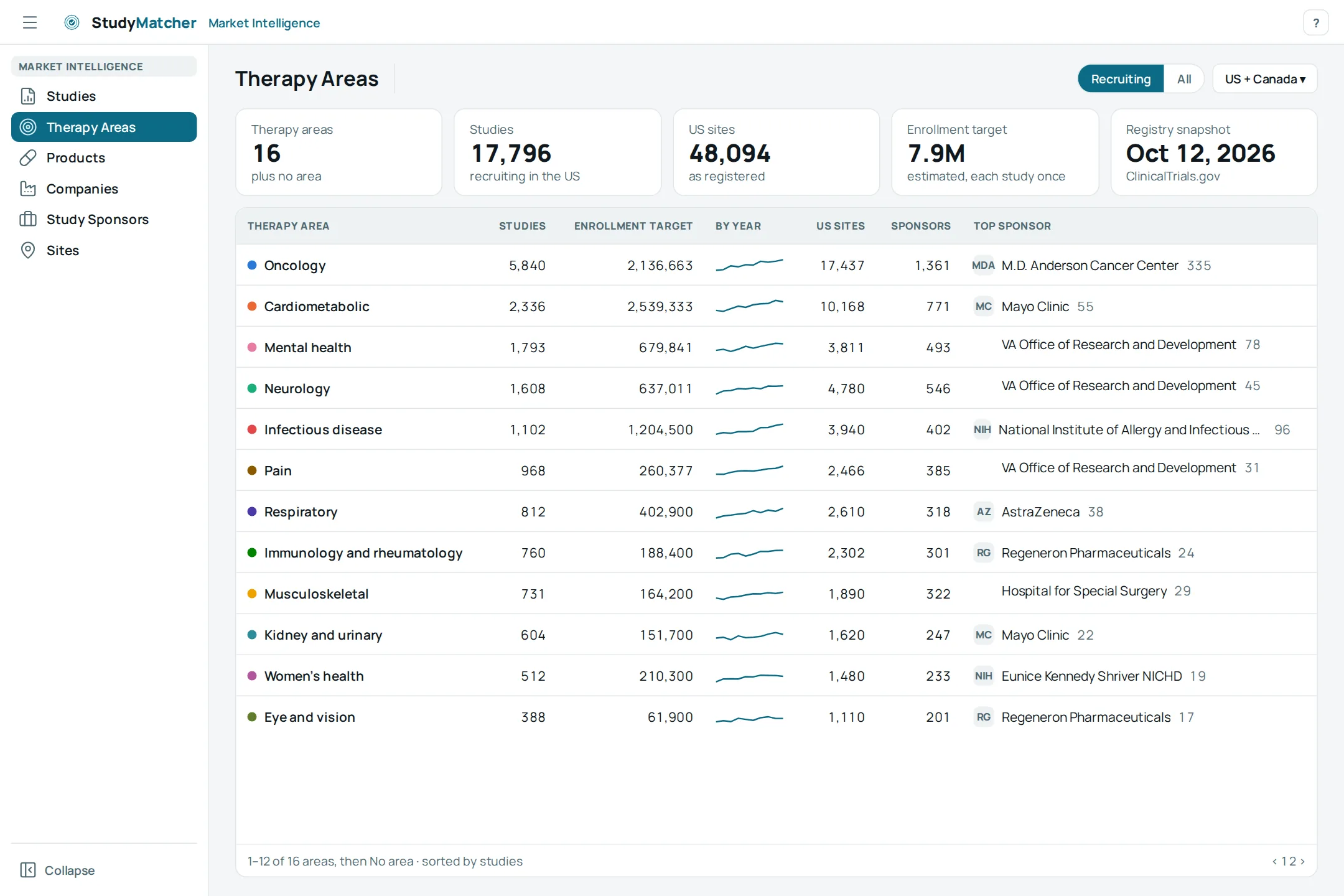
Therapy areas, side by side
Every therapy area with its studies, enrollment targets, trend, sites and sponsors. Switch between recruiting studies and all of them.
- Which areas are growing fastest?
- Who sponsors the most studies in each?
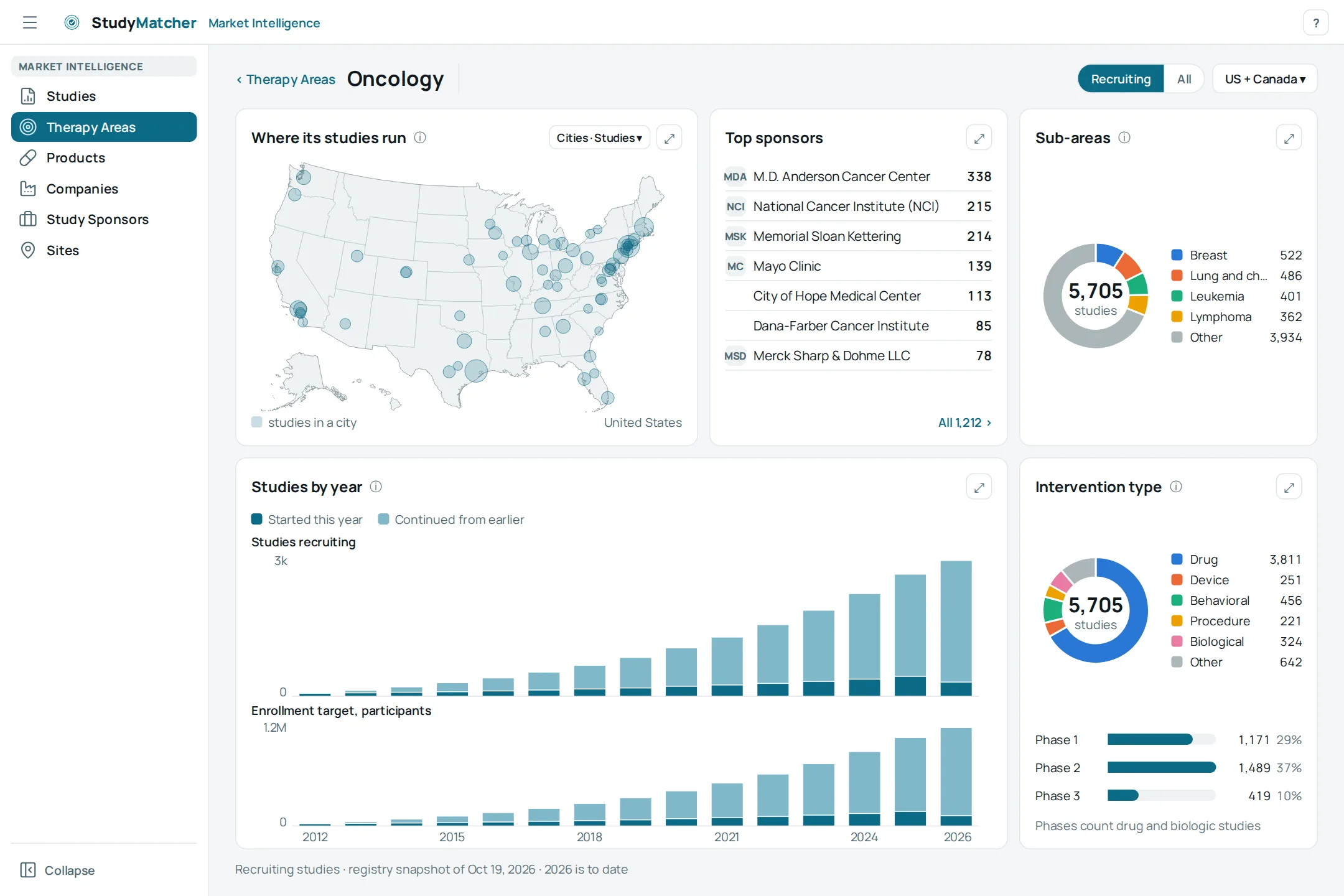
One area in depth
Where its studies run, who sponsors them, its sub-areas, intervention types and phases, and studies by year with their enrollment targets.
- How crowded is lung cancer compared with breast?
- How much enrollment is the area asking for this year?
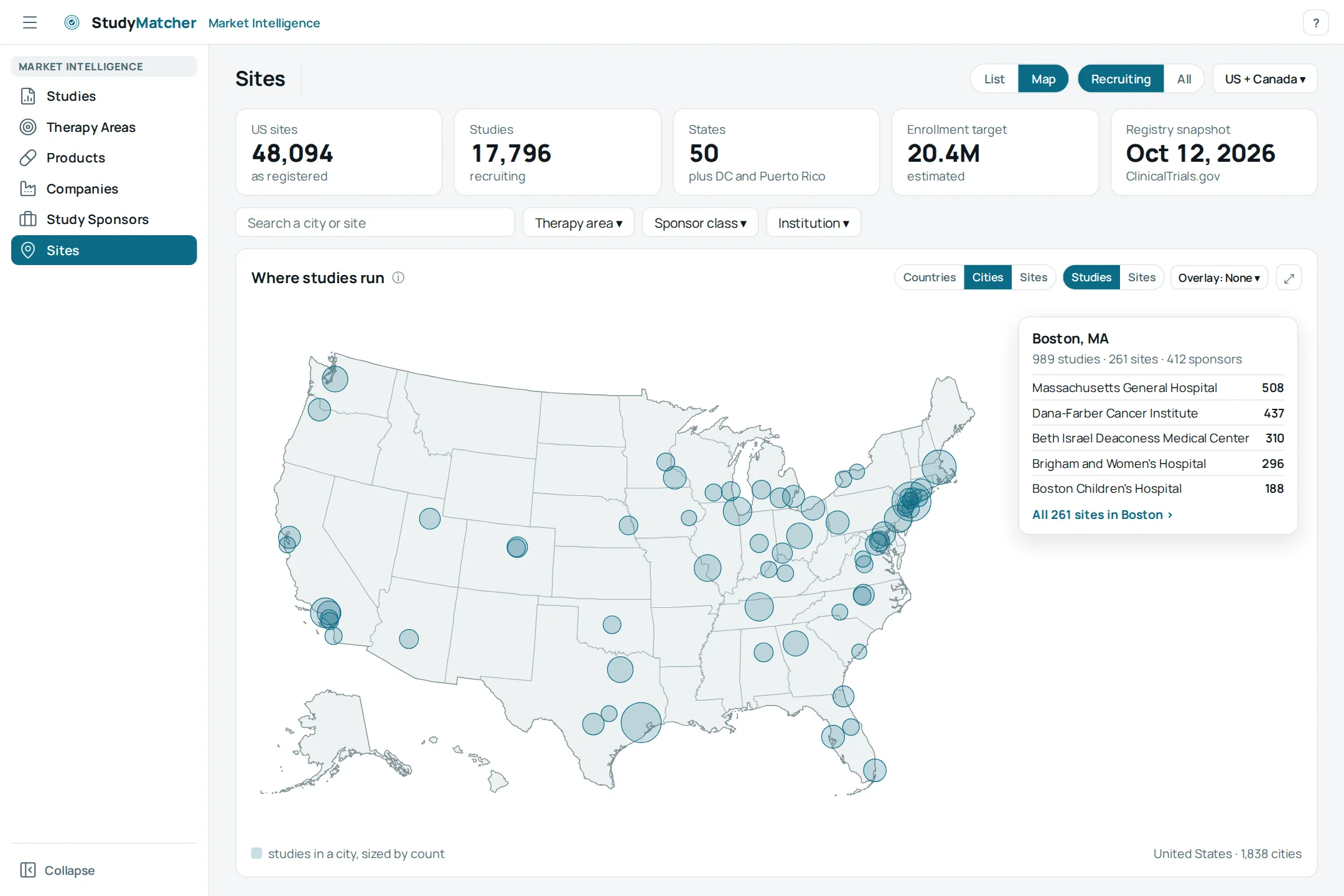
Sites, on the map
Countries, cities and sites on one map, counting studies or sites, with population or sites per million people laid underneath. Click a city for its sites.
- Where do studies like ours cluster, and where are the gaps?
- Which sites in Boston run the most studies?
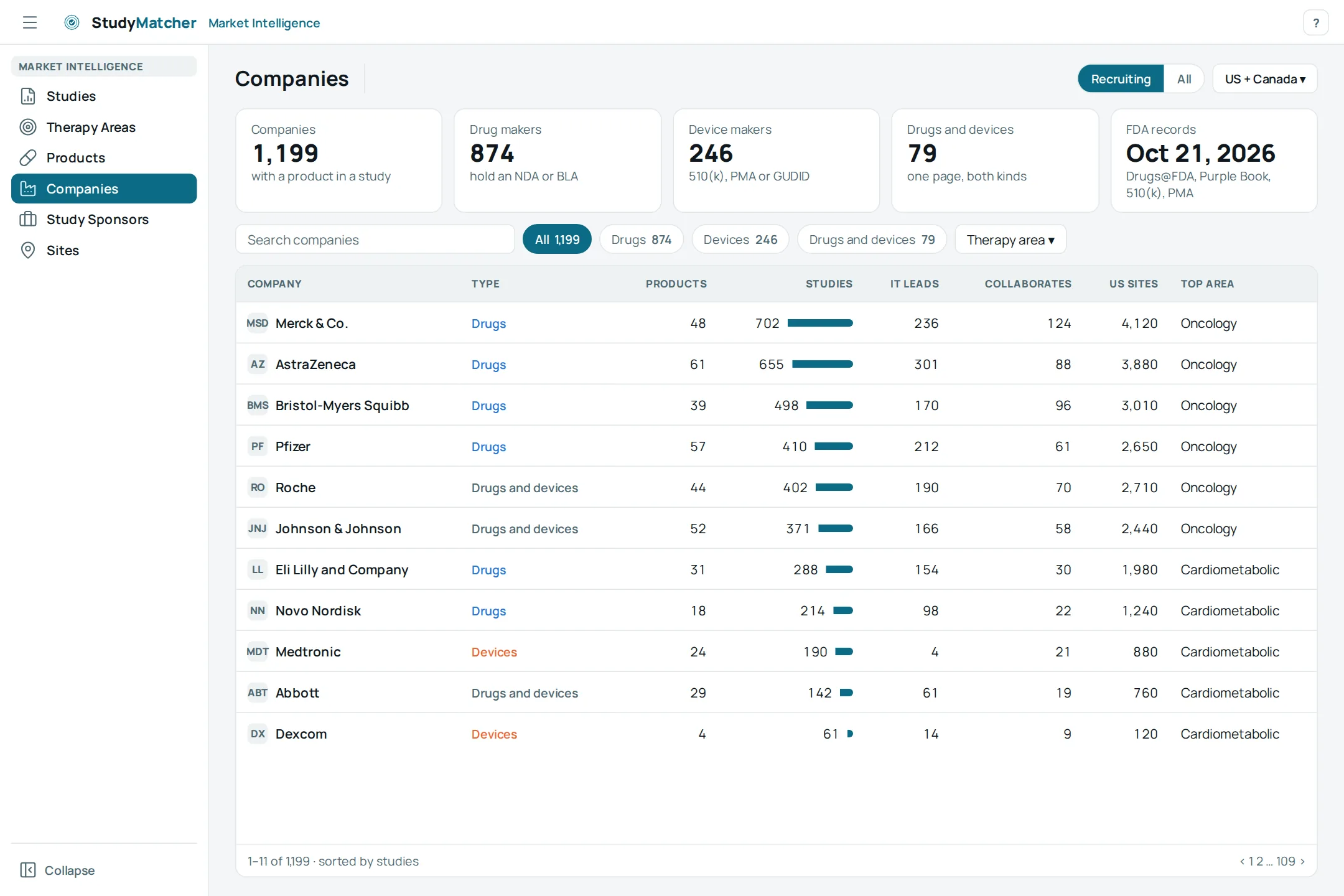
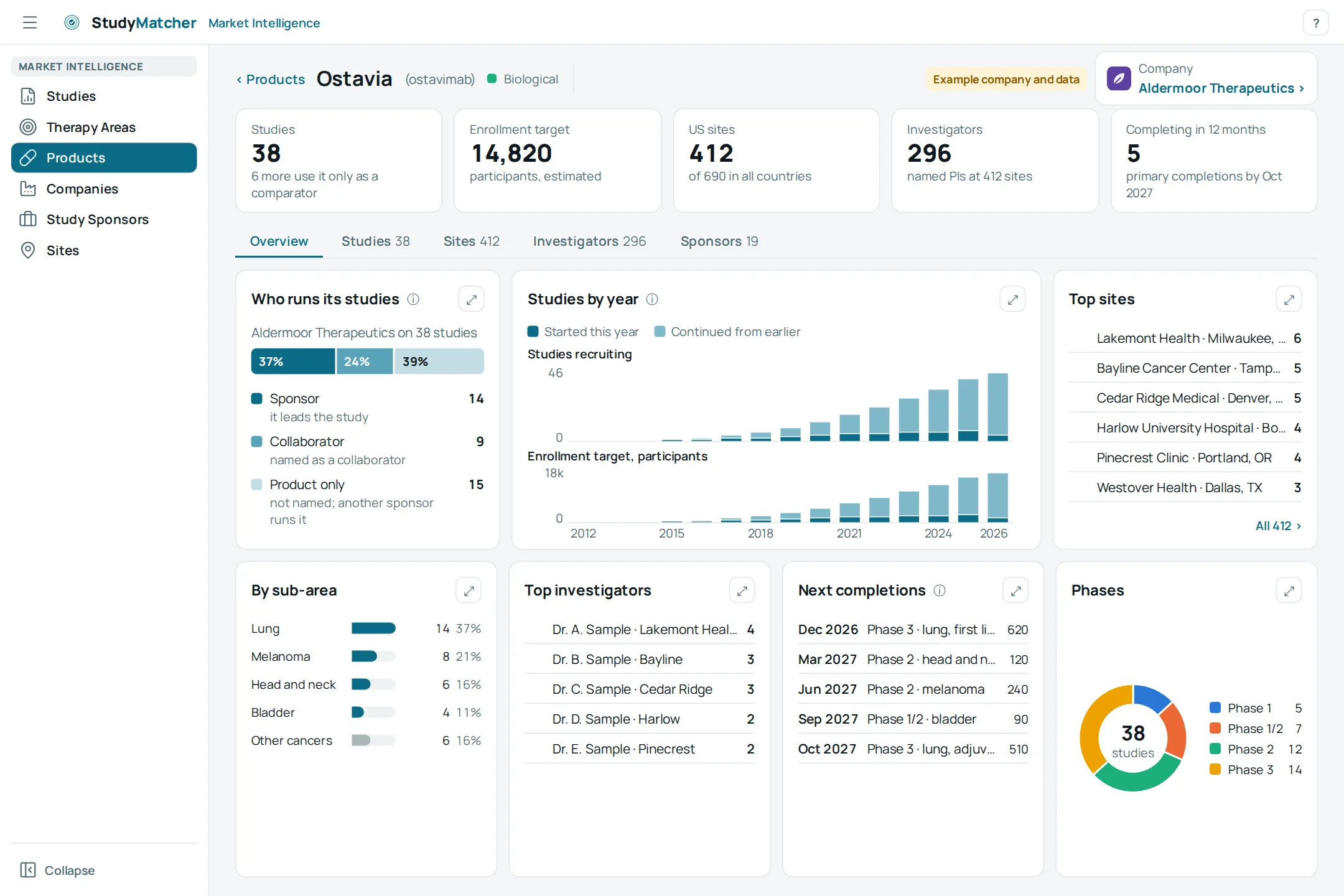
Every company with a product in a study
Drug makers, device makers and companies that make both, with how many studies they lead, collaborate on, or appear in through a product.
- Who are the most active companies in our area?
- Which device makers run their own studies?
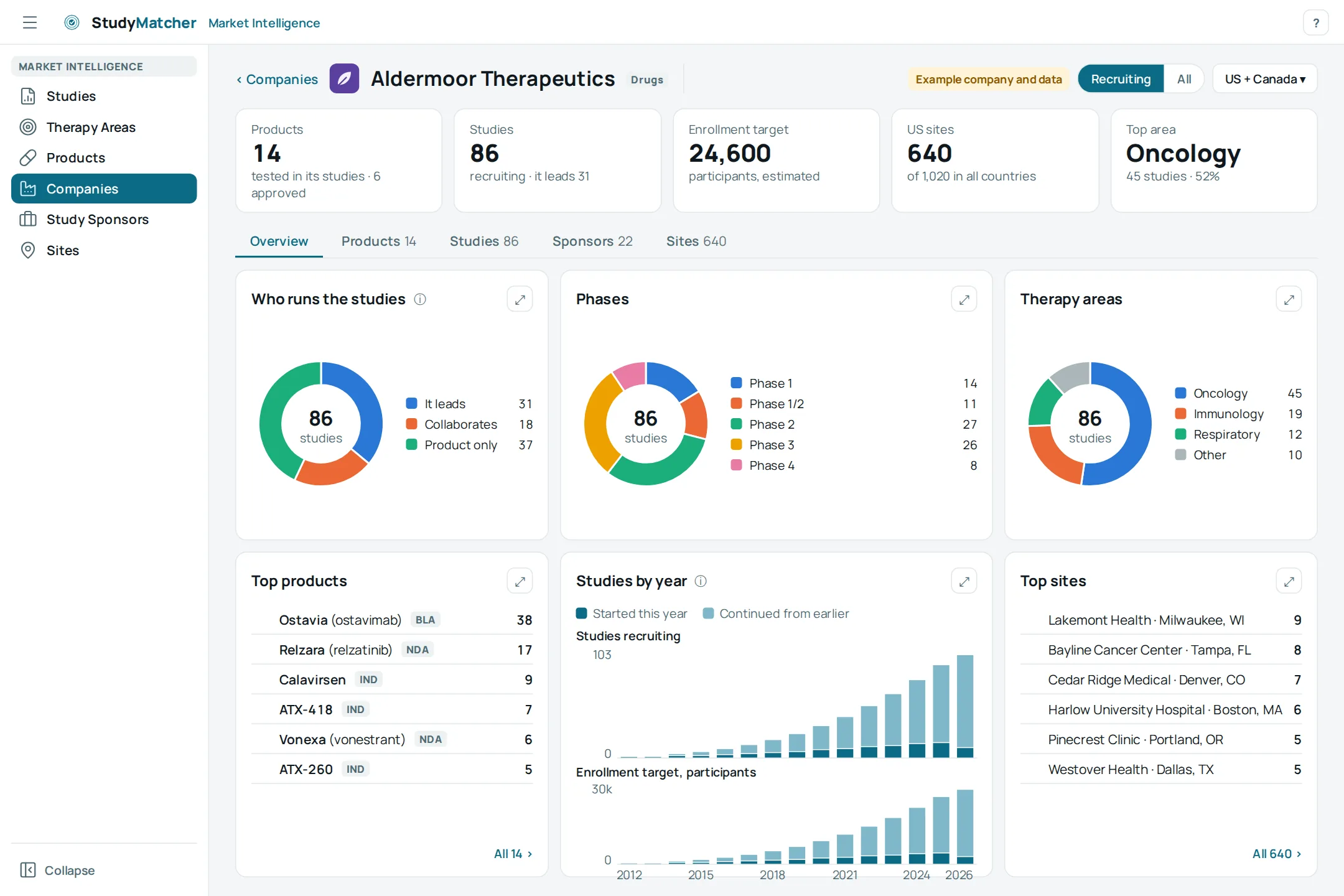
A company's pipeline in the registry
Its products, the studies that test them, who runs those studies, their phases and areas, and the sites it works with most.
- Where is a competitor's pipeline concentrated?
- Which sites does it rely on?
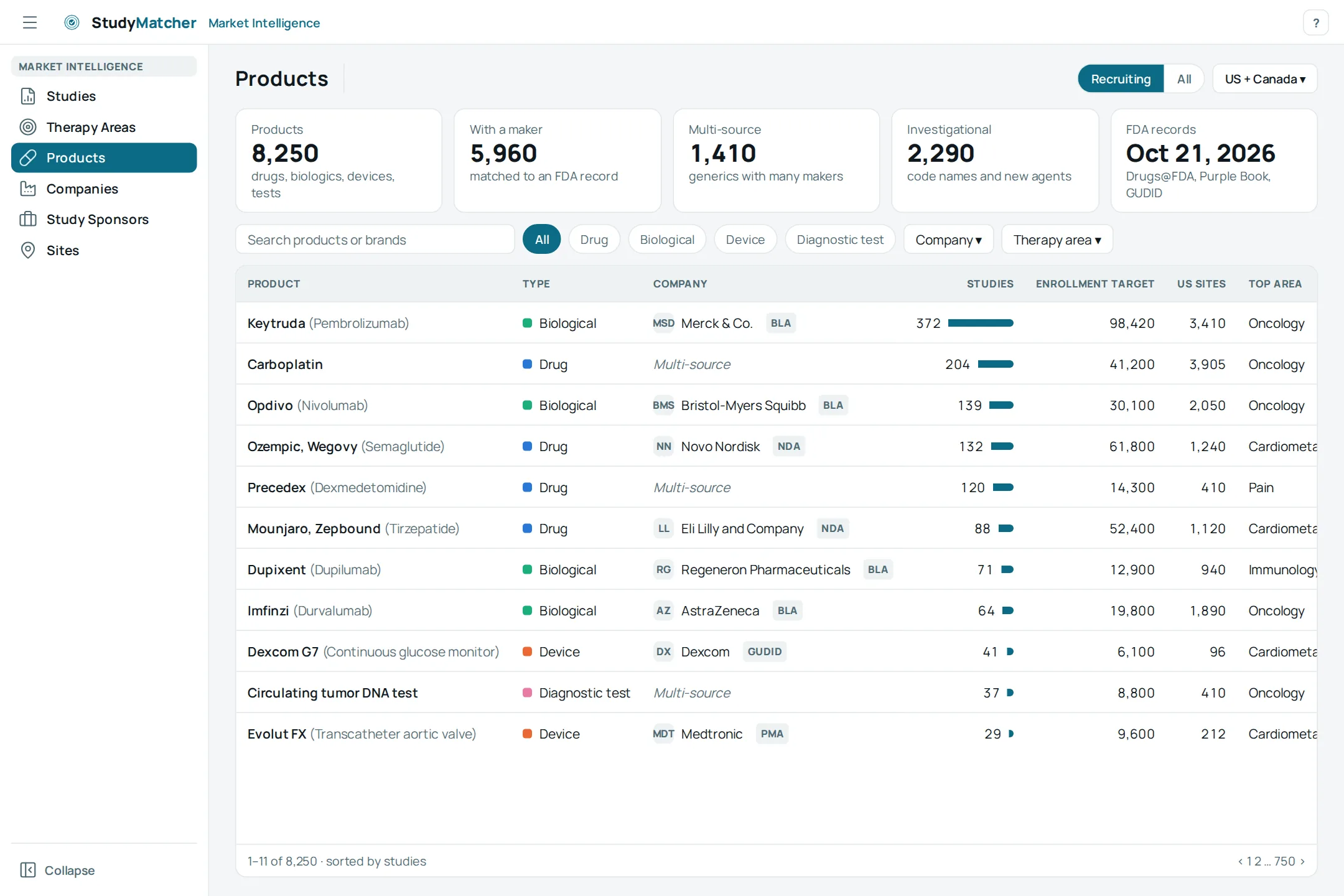
Every product being tested
Drugs, biologics, devices and diagnostic tests, brand names first, each matched to its maker and its FDA record. Generics with many makers say so.
- Which products are in the most studies right now?
- How much enrollment is each one asking for?
A product's studies over time
Every study testing it, over time; the main sites and investigators running them; enrollment targets; and the primary completions coming next.
- Who are the key investigators for this product?
- When do its next readouts land?
Screens are from the product's design, and their numbers are illustrative. Overview screens name real companies; Aldermoor Therapeutics, Ostavia and Lakemont Health are invented.